Monday, June 13, 2016

La hija del sastre BreakoutEDU

Many people have contacted me in the past month to post about my Breakout sessions that I've done in class. Here is an explanation of one that I've done in class with the novel La Hija del sastre by Carrie Toth.

Why a BreakoutEDU?
   There are many reasons! To name a few:
It addresses most Universal Constructs - problem solving, creativity, critical thinking, collaboration
It's a change of pace for students
It's a new way to review the events of a novel
Students are using the target language in a different way
It creates leaders that ordinarily aren't leaders in class
It's fun!

Preparation - what do you need?
There are few things you need to do this particular BreakoutEDU:

Scrabble letters that spell out "mentiras" and another set that spells out "Lérida to Toulouse"

Black light and an "invisible" marker that can only be read by the black light.

Of course two Breakout boxes.

Six locks: one directional, three letter, two number

Map of Spain/France with the route from Lérida to Toulouse marked in invisible ink.

Map of Spain/France with the route from Lérida to Toulouse marked by arrows to indicate the route taken by Ignacio and Emilia's family: west north, east, north

QR code of a picture of a basement

2 hint cards

2 Breakout success sheets

online stop watch for recording time

 Cards to denote box 1 and box 2

QR code to wikipedia site of Franco to note his death: 20/11/75

Copy of the rules

Copy of the letter (below) to present to each group to get them started with their clue seeking.


The letter to get them started


Mi querida Emilia,
Yo soy un mentiroso. No trabajo en el banco ni soy un hombre bueno. Soy un soldado fascista y soy un hombre enamorado, enamorado de ti. La verdad es que el ejército me había contratado para conseguir información acerca de tu padre. Quería dejar la misión pero no podía sin ponerte en peligro a ti y a mí mismo también…
Estoy entre la espada y la pared No tengo otro remedio si yo no le cuento tu secreto al coronel, otros soldados van a forzarlas a revelar el secreto.
Escápense a Francia. Huyan. La vida de toda tu familia está en peligro. Sigan al norte donde se encuentren un mapa. Es un mapa de una ruta segura. Si Uds siguen la ruta marcada, pueden escapar a Francia.
Emilia, te pido perdón. Si me puedes perdonar, quiero casarme contigo. Seguiré la misma ruta a Francia y los buscaré. Podemos ir a Francia con tu familia y cuando lleguemos podremos casarnos. Puedo ayudar a escapar a tu familia. Espérame, Emilia. Por favor perdóname.
                                            Siempre tuyo, Ignacio


Now for the clues!
Box 1

Clue #1: scrabble letters spell out "Lérida to Toulouse"
Problem solving: The distance from Lérida to Toulouse is 323.1 km
Code for lock: 3231

Clue #2: QR code that leads to a picture of a basement
Problem solving: Who spent so much time in the basement?
Code for lock: papá or sastre

Clue #3: Map with directional arrows of northern Spain/southern France
Problem solving: Why is this map important? Where are the arrow pointing?
Code for lock: left, up, right, up [west, north, east, north]

Box 2

Clue #1: Black light on Spain/France map, marking Lérida to Toulouse
Problem solving: The distance from Lérida to Toulouse is 323.1 km
Code for lock: 3231

Clue #2: QR code leading to wikipedia page about Franco
Problem solving: With all the statistics presented, which is most important? When did Franco die? Dates in Spanish are written "backwards"
Code for lock: 201175

Clue #3: Scrabble letters that spell out "mentira"
Problem solving: there are many lies presented in the book.
Code for lock: LIES


Playing the game
At first this seems rather easy to figure out. However it is very interesting to watch students problem-solve their way through the clues and codes. These are not nearly as obvious as they look. First, they need to find the clues around the room. One clue may lead to another clue, similar to a riddle. Understanding the context of the story helps them figure out what is important and how to open the locks. Typically it's the quiet kid in the back who is most creative in the problem-solving of the clues. The kid who is not as academic will rise to the occasion in this game.

Sometimes there is frustration over not being able to find clues or not being able to figure out the clues. Some groups need lots of encouragement to persevere. Some groups run with the clues and love the challenge to open all the locks, or even continue beyond the allotted time just to see if they can break into the box. No matter the groups or combination of learning styles or personalities, the excitement of opening the first lock provides more motivation than anything research-based strategy out there!

Having two boxes presents more of a challenge for students as the clues around the room may be for their box or their opponent's box. Sometimes one clue serves for both boxes. During a recent BreakoutEDU activity, students learned that if they found a clue, it was really important! They actually started "stealing" the clues and negotiations began to get clues back. WOW, I didn't see that one coming! It was a very unique make-up of students and learning styles in that class. In the end they decided it would be best to all work together to open both boxes so they did end up sharing the clues, trying passwords on both boxes.


So we broke out, now what?
¡Qué chido! ¡Enhorabuena!
Take a photo of the group(s) that broke out, post it on twitter with the school or class hashtag, post on other social media to give yourself and the students some positive PR and marketing.
Of course no game would be complete without a tasty prize. :)


Debriefing/Reflecting/Metacognition
This is an important part of the game. Having students understand why something was difficult or easy, who had good leadership skills and why, what helped get things moving, how they had to work together as a team and collaborate on their strengths are all important in the learning process.

I also help students process the clues at the end, giving us one more journey through the book. For example:
-Explain some of the lies that happened in the novel. Why did they have to have these lies to stay alive? What if they told the truth about that information?
-Who was Franco? What was his role in the novel? How did the fascistas view him? republicanos? his soldados?
- Why was the map important? Why did they have to get to France? What was the importance of Toulouse? Who was there?
- What was the importance of the basement? Who was there? Why? Why couldn't he escape? What happened in the basement?


Friday, June 3, 2016

Storytelling via Movietalk

La broma: Ay Vamos

Storytelling is at the heart of TPRS: learn vocabulary structures in context that is comprehensible to the learner and they will acquire language more quickly.

Sometimes kids need to have a change up in routine to keep things novel and interesting. I found this awesome song that has been at the top of the Latin charts for awhile and found the video to be awesome. There is so much we can talk about in here. Many of the words are words that they already know, but we are putting a twist to it with the past perfect tense. We focused on those structures and told the story of Ay Vamos.

I used the slideshow below to front load the story and vocabulary. I paused the actual music video and took some screenshots to focus on certain scenes. We added some details and minor circling to reinforce it. After, we watched the video in its entirety and sang the song throughout the week. They had a new connection to it and really got into the pranking that happened in the storyline. 

After the presentation, they were more easily able to use the present perfect to understand the next story's vocabulary and we flew right through it! 


End-of-the-year Evaluation

The end of the year is a time of reflection and planning for the following year. While it is important to self-reflect and assess throughout the year, the end of the year brings a different type of evaluation. I have seen many versions of course evaluations, have tweaked my own over the years and have found this one to be most effective in getting the feedback I am looking for.

Often throughout the year and the end-of-the-year evaluations give me great feedback that I use to incorporate in the future. Student input and using that feedback empowers students, giving them a voice in their learning. This feedback has also developed who I am as a teacher and made me better at what I do in the classroom.

What do you include on your evaluation? Is there a district-directed form that is used? How have you tweaked it over the years?

La hija del sastre: Cartas colaborativas

After reading La hija del sastre I hooked up with one of my colleagues in another district who was also reading the book with her students and a few chapters from the end of the book. I wanted to get the kids to think outside the box a bit and use what they knew about the novel in a different way. 

Goals:
- Retell the events of the novel La hija del sastre
- Write using quality sentences and structures in Spanish
- Use technology to correspond with other students outside of own classroom in Spanish

- Connect with a character in the novel on a personal level

Process
I created a google doc that listed the group number, name and email, and a list of characters in the book. Students logged in signed up to be a character by writing their name and email next to their chosen character. The partner school students then logged on to sign up for a character they were writing to along with their name and email.

Once the groups were chosen, they created a private google doc to share with each other and the their teachers. They had to show evidence of having read and understood the story by including the character's thoughts, hopes, worries about certain events, as well as questions for the receiving character. As you can tell, we were trying to get the students to use the subjunctive mood. We gave them some suggestions to use:
    1. Ayer…
    2. Después de entrar al taller un hombre guapo…
    3. Me siento…
    4. Me preocupo que…
    5. Espero que...

The characters had to interact at least three times. These types of collaborative projects are great because they make the students think a little differently and also "up the ante" with accountability. They make the students more responsible for their learning, giving it a purpose for why they are doing this. It is also fun to experience language skills of other students and give them confidence that they are doing better than they may have originally thought.

What are ways that you reach outside your classroom to give students experiences through the 5th C?

Thursday, June 2, 2016

Texteando

Texteando con estudiantes


Yep, I've got your attention now. So, it was a little white lie. I have strong feelings against texting students (outside of www.remind.com). We did learn how to text in Spanish, however, to give students a way to use their skills outside of class.

To get started
I set up a google doc and students logged in and we together we read through the overview and step-by-step instructions. There was some proverbial hand-holding, but for the most part, my Spanish II students were able to understand what they were being asked to do in the language.

Start texting!
Once students entered the conversation, got their initial post going, they started "texting" like crazy! It was fun to see what they had posted and the conversations that they had. Some were, well, not so interesting. Others were in groups that had inside stories and they thought were totally hilarious. I didn't care what they were writing, just that they were communicating in Spanish, using the texting phrases, and having fun.

After about 30 minutes of texting, they connected the idea that if they were on their phones, it would be through snapchat. This started the flood of pictures being posted. Teacher editing had to begin and opened a good impromptu lesson on "time and place" and also digital citizenship. Overall the students were very polite and respectful and enjoyed a change of pace from the usual storytelling and reading.

How much did you learn?
After the students had an opportunity to play with the language, it was time to see how much they learned. Working in their conversation groups, I showed one shortcut at a time and the groups wrote on an individual marker board what the it meant either in English or in Spanish. What was most interesting was the conversations that took place. "Hey you had that one in your response to me!" "Remember when you were talking about [X] you used that one."

What would you add?
Now's your turn to help me out - what are other phrases that you know that could be added to the list?


FVR: Battle of the Books

Confession: I'm a book junkie! I just love books and have thus accumulated a rather large library of books, magazines, newspapers, pamphlets, comic books, and other reading material of various levels. Whenever I travel, I usually bring back authentic reading material. When I first heard about Free Voluntary Reading (FVR) you can imagine how excited I got!!
This year I implemented a FVR project in my Spanish III classes during the fall semester. We did various accountability activities such as recording what you read and reactions to that reading, book reports and the like. This spring, I turned it up a notched and we did a Battle of the Books competition. I pretty much have a copy of all the TPRS books so this seemed logical to use these. I knew they would be at the students' reading level and that they had read a few of them in previous classes.

I set up a document for them to start with, make a copy and share with their team. I checked off the books that should have read in their previous levels of Spanish according to the curriculum set at the district. Students were given 10-20 minutes to read 2-3 times each week. We even had a "Read and Feed" a couple of times.

Competition
After a semester of FVR, the team assembled and battled it out! As usual Battle of the Books style, some teams were more successful than others, but we all had fun.

I wrote questions for each book. After the initial round, I tried to pair them up according to the number of questions they got right, hoping this would make for a good, friendly competition. Teams were given 30 seconds to answer. A correct answer was awarded 5 points. If they were incorrect, the question went to the other team who had a chance to steal it for 3 points. Winners moved along the bracket to the championship round. It was a fun way to end a semester of FVR!


¡CAMPEONATAS!


Runner-ups

The Amazing Race


It's the end of the year and I needed an activity that was engaging, yet made kids think in the language. I also wanted to combine a CBE element so I created this Amazing Race-style activity. It took about a week of brainstorming and planning, but I have it all here for you to set up.

Planning
As I stated earlier, I wanted to add an element of Competency-Based Education so I looked first at the teachers who had a prep period during my class and tried to link it to either the Spanish language or culture. This became the stops along the way.

Initial route card
To begin the game, the students received a sealed envelope with scrabble letters that spelled out "lider". They had to tell me who our leader was [superintendent's name] to get their next route card. Little did I anticipate that they were in country groups so they were trying to get the name of the political leader, the mayor of the town, president Obama, or even the principal's name. I really only anticipated they would do the principal's name, not a political leader. Duh, why didn't I think of that? too obvious? ha, so they were off to the next clue with their route card.

Superintendent
I wanted the students to make a connection with the superintendent and he appears to be a fun guy so I asked him if he would be willing to help with our activity. I wanted to send the kids to him first so as not to interrupt his time too much. The students, as a team, had to take a selfie with him and post it to our school hashtag #nevadacubpride This also served as marketing/publicity for our department. After posting the selfie, they received their next route card. One problem was the one group was still looking for the superintendent's office when other groups were nearly done. This was a good education for everyone. :)


Social Studies
On staff we have a Global Insights course taught by one of our social studies teachers so I found a picture of a street corner in the neighborhood La Boca in Buenos Aires, Argentina. They had to find where that was and the clue on their route card directed them to the teacher and they had to either identify the neighborhood or the city/country, which then gave them their next route card.

PE
We have a phenomenal PE teacher who is Greek and totally loves kids and their health. Fortunately he was one that had a prep and was game for anything! When they arrived to him, after clue connected to soccer, he had the students do an activity like run stairs or make baskets for their next clue.

Math
This clue went to one of the math teachers in the end. The students had to scan a google doc that directed them to a youtube video and a maya math problem. The video explained how to decipher the maya math numbers, then they had to figure out what the number was and that became the clue to the next route card. One glitch is that I should never be a math teacher as my math was incorrect! I had one group explain the number to me and after adding with them, realized their clue was not correct. ugh. Quick fix, but it slowed a couple of groups as they really did have the correct number! On to the next route card.

Spanish
The final route card led them back to the Spanish room where they had to proclaim ¡Ya estamos listos! and present all the route cards and detour cards.


I also needed some "detours" so connected these to other things, but still within the language.

Chocolate
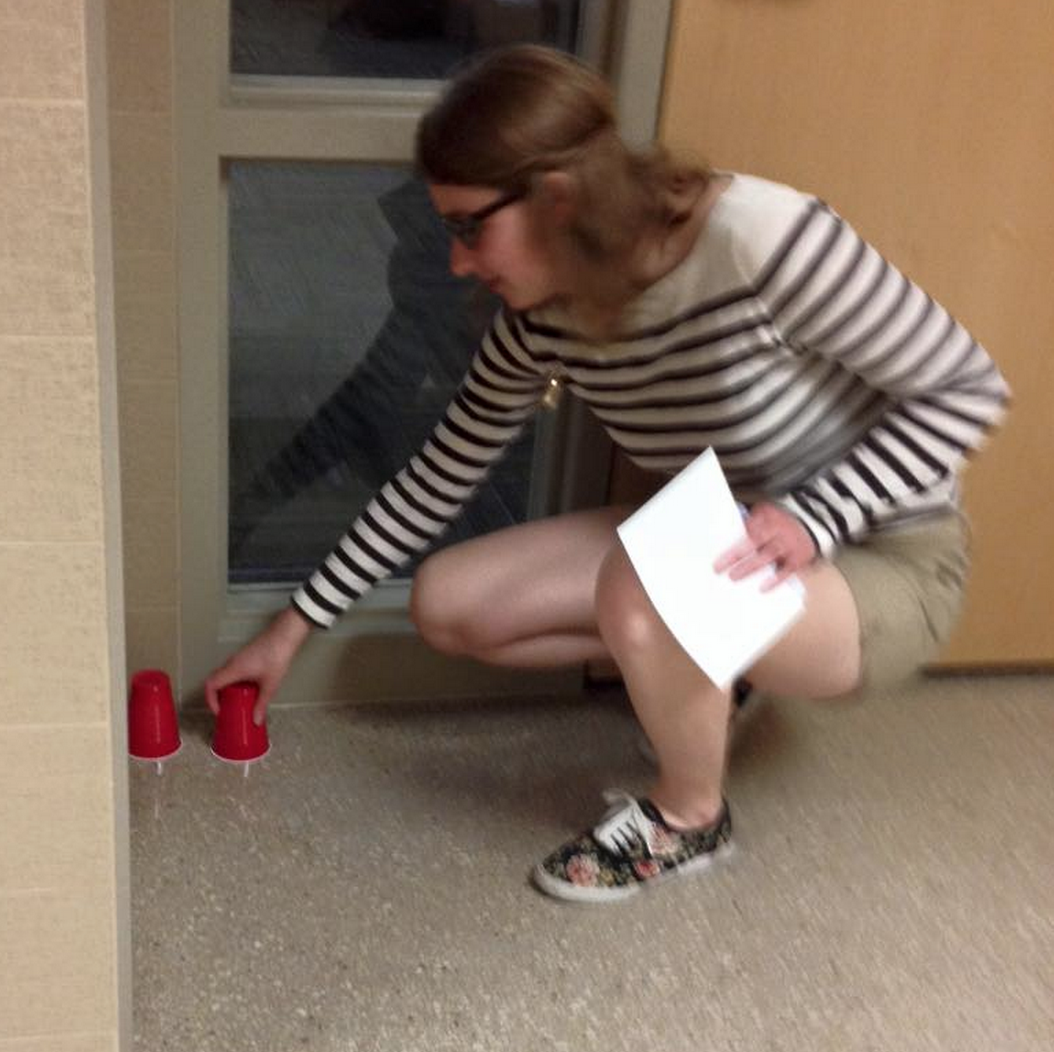
I placed 1-3 colored cups outside every classroom, upside down, with a piece of chocolate under some of them. Those with the chocolate also had a QR code inside that needed to be scanned for a secret word. The students had to bring the piece of chocolate to me with the secret word. This worked better than I thought in that some students just tried to bring a secret word (because they didn't find a chocolate or heard from another group) or just bring the chocolate without the secret word.


Battle of the Books
We did this activity the previous week so it was all fresh in their minds. We had a competition earlier in the week in which the students battled out the top knowledge of all the TPRS FVR books in the classroom. I kept the questions and when they came to me with this detour they had to answer at least one question correctly! Yes, some had 2-3 questions before they could answer correctly. Hey, it slowed them down as they weren't prepared and had to wait for another question, right?


Preparations
So, all the route cards and detour cards were planned. Now I had to prepare the school, teacher helpers, and the print the necessary resources.
1) Set out the cups in front of doors with QR codes and chocolates. My younger children helped me with this the morning of the activity.
2) Print QR codes for all classroom doors, office doors, and library doors. I first put all "¡incorrecto!" QR codes on all the doors to be sure everyone had a code...in case I forgot one accidentally. Then, went back to the ones I needed and replaced them with a "se permite entrar" QR code. Students were required to scan the QR code before entering anywhere as they were not allowed to enter all areas of the building to disrupt the regular learning environment of classes. It was kind of like in the movies when they scan their hand print or eye to gain access to a secure area. Yeah, we were that cool in this game!
3) Email all staff and students to notify them this was happening and ask for their support in not disturbing the cups, QR codes, and other things they saw in the hallways. I promised to clean it all up after class!
4) Take the route cards to the assisting teachers. I first placed them in a manilla envelope with their name on the front and the "password" on the back so when they reached in the envelope the password was facing them and not the students. I handed the envelope to the teachers the day before so that they could still commit to the activity and ask questions if they needed.
5) Either hand out or post the detour cards. My assistant principal was very eager to help with the activity so I gave him one of the detour cards to hand out randomly to groups when he saw them. OMG he had such a blast with this! The other detour card set I taped to the window on the door to the library so that the students would find it as they were walking the hallways.
6) Of course I had to print the route cards and detour cards on card stock (although regular printer paper would work), cut them and organize them into manilla folders and deliver them to the necessary teachers. See the slide show below for the cards I used. They were printed horizontally 2 to a page and cut in half.
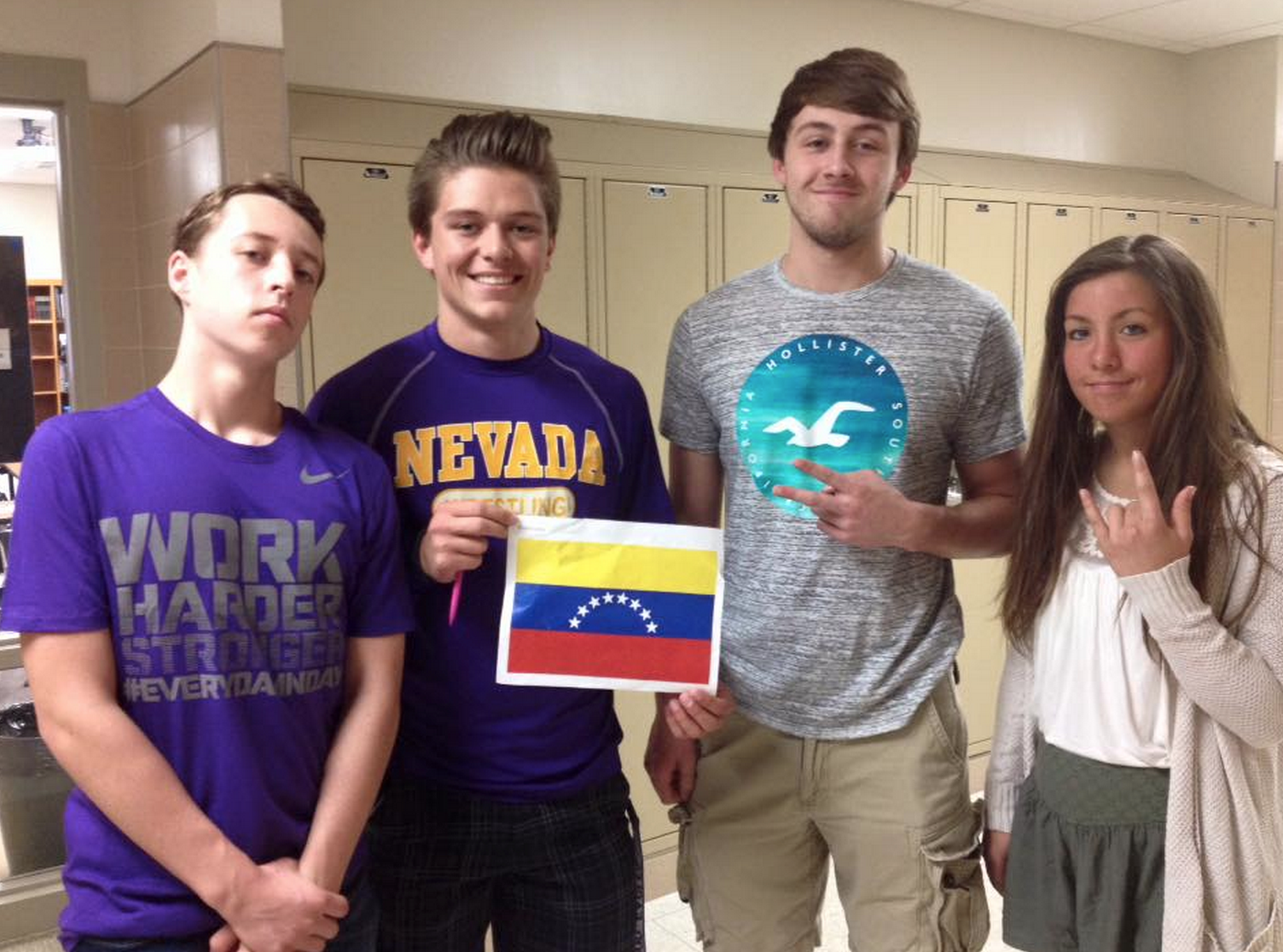
7) The students were in groups that were named countries so I printed off colored flags and randomly handed them to students as they walked into the room that day, instructing them to find 2 more "soldiers" to add to their country's "army". Their flag became their hallway pass as everyone knew what they were doing and when it was happening.
8) Find a picture of La Boca in Argentina. Ironically, they saw a picture of the Argentinian flag on the building and got their clue from that. Hmmm, might have to find a different picture next time.


Amazing Race
The day of the activity was so much fun and so much excitement brewing among the students. They knew I was planning something, but didn't know exactly what it was. As stated in number 7 above, they were directed to find their group.

We went through the rules and I handed them the envelope with the scrabble letters in it and they got started right away! Some left the room, forgetting that they needed to tell me the clue to get the next route card. They were back soon. lol

The whole activity went quicker than I thought it would. I really had no idea how much time I needed, however I was glad that we were on a block schedule and had that "buffer" of time. This activity could easily be modified to one less route stop and be done, rushed, in a 40ish minute time frame.


The Amazing Winners!

Ironically, due to block scheduling, students can double up on their courses so there are two sophomores in with two seniors in this group so they were the youngest group in Spanish IV, and they were the winners!


Saturday, April 16, 2016

La corrida

After viewing a blog post from Profe Tauchman, Running Dictation, I wanted to replicate the game with my students. We had to review another chapter from our book. This seemed like a great way to get in more reps in an active way so that students couldn't be complacent and take a back seat. It was also a game that I had not played with them yet.

The desks were arranged in pods of 4. As students entered the room, they were instructed to choose a seat with students they could work with productively. One we got started, students were explained the jobs of each person and they could choose which job they wanted. Each pod had one individual marker board and a marker.

El corredor - this person runs to me at the front of class to see the sentence. He can return to see the sentence as many times as necessary to get it correct.
El secretario - has the marker and board, writing exactly what the corredor tells her. She can ask questions, ask for clarification, or for the corredor to return to the front to see the sentence again.
El dibujante - takes the marker and board from the secretario to draw an obvious picture of the sentence. All parts should be included and clear visualization of the sentence.
El maestro - is in charge of being sure that everything is spelled correctly, and eventually raises the board for affirmation of answer.

Once a board was raised, I would indicate to each group if they had a typo or needed a clearer picture. No specifics were given about where the typo was or what needed to be added or changed about the picture. The first correct answer was awarded a point for their team.


Once a team won a point, we discussed additional information about the sentence, including as many structures as possible.


El camino

What a beautiful day we had last week! It was time for a walking lesson.

I first heard about doing this about 15 years ago when I attended a conference that I don't remember or even where it was. However, the underlying theme of the session was wellness: students need to move to get their blood pumping so that the brain is active and responds more quickly. Yeah, that made sense to me and I love being outside and not cooped up in a room for an extended period of time. I can only imagine what our students go through as well. They definitely need a change of environment, too.

We have been reading a novel (only into the second chapter), so I thought this would be a great way to review the events and structures that they have been struggling with in the reading. I usually retype the novels and add links to cultural topics, translate some FYI words, and add comprehension questions and ancillary activities at the end. The students can also take their own notes directly in their book, too.

Preparation
Using the comprehension questions already created, I copied them onto a new document and labeled two identical lists with "A" and "B". Before school I drive the route that I will be taking the students on and use sidewalk chalk to mark numbers randomly. For example, if I have 8 questions, I randomly write the numbers 1-8 along the route on the sidewalk.

Rules
Students need to have the expectations set out ahead of time to be sure this activity runs smoothly. Most of these are intact in the physical classroom, but once the classroom becomes mobile, kids tends to throw out the rules.
1) Respect
        -respect the community - stay on the sidewalk, don't run through yards, pet dogs or other animals. This gives us good relations within the community.
        -respect each other - we have a social contract in our classroom and they need to be reminded that this is still in effect even though we are not in the physical classroom; when we are together, it is our classroom and the contract is still in place with our group.
        -respect other classes - students get very excited for this activity and are very chatty as we head out the door and through the hallways to get outside. Reminding them that this is a privilege that they have earned to do this activity and we need to respect the other classes that are still "back home". There should be silence in the hallways, just as if they were going to the restroom.
2) All in target language: Again, although we are not in the classroom, the expectation that we are still practicing our skills. The best way to do that? Use it!
3) Observe the silence: Sometimes we get so involved in pushing the language, but honestly, just listening to nature can go a long way to igniting energy and excitement. Introverts love this rule! Also, it is very rare that no one is talking so they do get some additional listening practice as they are observing silence. 
4) Stay as a group - 1/2 block: Although we are on a walk, it is important to stay together, within a half block between the first person and the last person. I usually don't have a problem with students escaping or taking a longer or different route than planned, but it is important to stay as a group to keep a head count. Also, if they are all together, additional listening practice is built in and there is collaboration if they forget how to say something.

Walk
Before heading out the door, I draw a simple map on the board so that they know the route. They also need to know that the questions will be along the route in random order. Once they pass over a number, it corresponds to a number on their list and should be discussing it with their partner until they get to the next number. It may be that they are not able to discuss the entire question before getting to the next one - they can continue it later when they get to a question that is shorter and run out of something to say.

Students match up, using the A questions and the B questions. They do figure out pretty quickly that they are the same, but this helps it be a little more random. Some walks I will create different questions between A and B lists. I make the students stand at the door next to their partner and I quickly glance that there is an A with a B. This becomes their conversation partner on the walk. A quick reminder to be respectful in the hallways and we are off!


As we are walking, I moving forward and back, listening to students. I also engage them in random conversation when they are done answering the question, sometimes before they even start the question. The real goal: conversation, right? Who cares what they say as long as it's in the target language!

Processing
When we get back, we process the walk. First, we analyze the rules and how well we did with the expectations. I call out the rules, one-by-one and the students rate themselves 1-5 with their fingers. For example, one class had an overall rating of 5 fingers (max) for respect and staying together, but next time we will have to work on staying in the target language (2 fingers) and observing silence (1 finger, contributing to lack of TL).

Then, as a group we went through the questions again. Yes, it was another way to get in more reps! It also clarified the chapter content for the students.

In the end, they really enjoyed it and wanted to do this at least weekly. Hmmm, I think I'll keep that tucked in my back pocket for novelty. :)


Monday, April 4, 2016

Shhhh, we're secretly adding more reps

One of the main premises of TPRS/CI is that the students hear the structures multiple times. How does this happen? Using as many repetitions (reps) as possible in novel ways, circling the structures. While we can all improve our trade, I always felt this was one area that I needed to focus on...until last week. It dawned on me that students receive reps in ways that I didn't think about before, using strategies that I knew worked. In reflection, I see that there are numerous reps they hear each class period.

Last week we started a new book, El viaje perdido by Lisa Ray Turner and Blaine Ray. The vocabulary structures we focused on were:

El vocabulario útil:
le encanta(n) - s/he loves (likes a lot)
mareada - seasick; dizzy
ni siquiera - not even
tenían vergüenza - they were ashamed
se dio cuenta que - he realized
a pesar de - despite
prodrido - spoiled
una bruja - witch
una broma - joke


Gramática importante:
había robado - he had robbed
había leído - he had read

We took no more than 2 structures a day, and slowly reading the chapter, circling content that was important and using the vocabulary. I chose a couple vocabulary words that we would be using in the reading that day. Here's how this played out:

Opportunity #1
Bellringer When students enter the room, they see these super mini stories with their picture that I find on the Internet and pasted onto situational pictures also pulled from the Internet, like this one using some of our structures. Some are old, most are recent. Some are words that they struggled with the day before. Either way, they can't wait to get into class to see who is next on the big screen. Once attendance is taken, and other book keeping activities we do as teachers, we translate the story as a class. They see the vocabulary used again in a  different context and we circle the information and elaborate the story using additional reps. I have also been known to use parallel characters (a flipped idea of a parallel character to the actual story) that uses the characters in the novel we are reading. Sometimes I will stretch their problem-solving skills by adding in a new word to see if they can understand it through context. Usually they can!


Opportunity #2

1, 2, 3, ¡YA! Using the vocabulary structures from the previous day and adding additional vocab from the part of the novel we read the day before, or any previous structures. I call out a word from the list and say, "1, 2, 3, ¡YA!" On ¡Ya!, students hold the corresponding number of fingers to "post their answer". There are always 5 words to correspond to their 5 fingers so they don't need both hands. It's a quick check of their language acquisition, based on our previous learning.


Opportunity #3

New vocab & PQA To introduce new vocabulary, a few at a time, students repeat the vocab with me as I repeat it at least 3 times, more if they are struggling with the pronunciation. This means they hear it up to 6 times between me and the student repeating it. Then we enter into PQA conversation using the given structures. I try to give them possible other vocabulary that may come into conversation as we begin discussing. I am always amazed how kids will retain even this  FYI vocabulary later and use in their retells and writing (output), even the traditionally "low" students. Pull out grammar is vital in this stage as they need to be aware of está podrido/a/os/as using the different foods mentioned. Lately, I've been able to even keep this in the target language. Now that we are in the middle of the chapter of the novel, the students are familiar with the characters and basically what's happening in the storyline, we can start to make predictions about what the characters will be doing based on the new vocabulary. 

Opportunity #4

Character retell When we start any novel, it is uber important to understand the characters and some background on them. This is an opportunity to Q/A characteristics of the main characters. I first allow students to volunteer any information they may know/remember about them and I will repeat the statements - yep, there's more reps! Then I will ask additional questions to engage them in focused structures through additional brief circling of content and structures. Pull out grammar is ideal here, too, to be sure they are understanding basic ideas of the language.

This book gives great physical descriptions of these characters so earlier the students drew pictures of each one, adding to their collage of drawings every time a new character was introduced. Using their pictures, they partner with another student to describe each character. This gives them good listening (additional input reps) and speaking (output reps) practice. 

After the students have an opportunity to retell all they know or can about the characters, we come back together and I ask... Clase, ¿quién es alto? ¿quién está mareada? ¿quién es una mujer hermosa? etc so that they get additional reps of current and past vocabulary.


Opportunity #5
El viaje perdido by Lisa Ray Turner and Blaine Ray 
Next part of the novel We are now able to enter the novel again. In a 90-minute class period, we are now down about about the last 30 minutes of the block. Wow, that has been a LOT of reps up to this point. This is why if they don't completely have the structures acquired during the reading I know they will get more the next day. This will give them additional, novel information to add to what we are talking about so that we can expand their conversation.

Once we start into the novel again, we first have to review what we know so far, right? Yep, more reps at this stage. 

We will continue reading where we left off the day before. As we read, I continually circle the content and vocabulary that they struggle with to better understand it. Just as proficient readers continually ask themselves questions like: 
  • Does this make sense?
  • How does this new character relate to the other characters?
  • Why is this character doing/say/acting this way?
  • Is this in check with the storyline? Is something not logical here?
  • _____?
Proficient readers also take notes, summarize, review, reread, look up words they don't understand, and discuss what they have read. This is why when we teach reading in another language we have to directly teach students to do develop these skills. This pushes teachers to ask all kinds of higher order thinking skill questions. Acquisition plus HOTS? Woah. It also allows for more reps to be included! How clever are language teachers, right? 

Opportunity #6
Quick Write At some convenient stopping point, usually 5-8 minutes before the end of class, students do a quickwrite. The goal is 100 words in 5 minutes. Again, this gives them additional reps using the language and the new vocabulary. Sometimes I allow them to use their notes, vocabulary structures, or whatever they have at their disposal (just not their book because I don't want them to copy the book onto paper!). Other times, for the challenge, I will have them put their notes away and just go from memory. It is truly amazing what they can do; some will even surprise themselves!


Opportunity #7
Acting When there is time and we have a shorter chapter with lots of action, students will help the class visualize what is happening while someone narrates the story. This could be a Reader's Theater style, a skit, based on the novel, or simply me doing Q/A while the students act. I did not do this last week, but it is definitely in my toolbox to get more reps into the class period.

The reading of the novel is what I have traditionally called the "meat" of the lesson since this is my goal is to have students read in the target language, seeing the vocabulary in context, and having impromptu conversations with the vocab and content. I was elated when my students last year no longer had formal structures "taught" because all we had to do was read and they understood the structures, using the aforementioned strategies. They just picked up the content and vocabulary because the learning was uninhibited and natural. That was some really fun teaching! I hope to get my new students to this level, too. 

Giving students as many reps of the vocabulary as possible is the surest way to give the gift of acquisition. When they have truly acquired the language, know what "sounds right", and can output the language they need, when they need it, we have accomplished our goal of language learning. It's not about the stories, it's about the learning and acquisition. OK, I'll also throw in, having fun too. 

This was just one lesson on one day, but gives a structure to how I plan my lessons. I certainly do many more activities than just these. This was meant to be a reflection on how I (we as CI teachers) naturally incorporate reps into our lessons. It wasn't until I looked outside my "meat and potatoes" that I was able to validate the quality that I did have in my lessons even though we spent so many days on one chapter. 

What are some ways you get additional reps in your lessons? Please share in the comments below.