Tuesday, October 13, 2015

Compañeros de conversación

Entering a new position in a different school district I knew I wouldn't have the same level of proficiency nor confidence among the student body that I had leaving my position of 19 years. I discovered that students really lacked confidence in speaking. I spent the first seven weeks pushing discussion to get them to a level of structured spontaneous conversation (I know that's not a logical statement), while engaging my resources abroad. What a great opportunity for them! I have been cheerleading their efforts on the whole journey thus far. We were finally able to get partnered with native speakers!

We set up a google doc of American student profiles and the Spanish students logged in and chose a partner with whom they wanted to chat. As soon as the connections started rolling in, the American students started emailing and setting up a schedule of when to converse. A full schedule of conversations is set for them so they know what to expect.

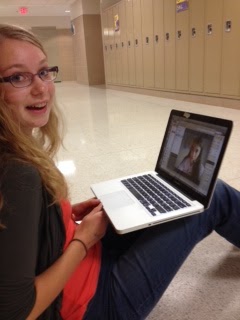
Monday was an awesome day! A student came running into class late, apologizing for forgetting that she had a dentist appointment and then announced "I need to get on Skype! I'm late for a conversation with my partner!!" We rushed to get her on and then sent her in the hallway to have a quieter environment to chat. Fortunately the other students had been working out the kinks to downloading Skype and how to screencast the conversation. Some fortunate work-arounds were discovered. She continued through the end of the class period and into the next class period. While I anticipated these conversations to only be about 5-10 minutes, especially the first few, this particular conversation lasted 45 minutes! I ran to get the administration and lead teacher to have them observe what was happening; it was so cool!

It was incredible to watch the negotiation of meaning, clarifying questions, helping each other out to get meaning out of the conversation, in addition to watching confidence grow throughout the conversation, a sort of culminating activity to verify what I had been telling them all along - YES YOU CAN!

In the end, she hung up from the skype call, collapsed in her chair, sighed a big sigh, and looked at me. I kept starring at her and said, "YOU DID IT! That was amazing!!" She just said, "That was the longest conversation I've ever talked to anyone, English or Spanish!" Yeah, this will be a memorable moment in my teaching career - helping a student see that what she thought she couldn't do really was possible!


Tuesday, October 6, 2015

Embedded Reading Extensions

Last year I learned of embedded readings and it totally changed how students looked at readings. I guided them through a couple of chapters at first with an embedded reading and then the next chapter I just read outright. Oh my goodness! I was not prepared for the backlash that happened. wowser. Students craved the scaffolding that an embedded reading provided. It also gave them great confidence in diving into the full chapter, after discussing the bare-bones version and then the extended version. This is perhaps the most powerful strategy that the TPRS/CI methodology has to offer.

This year, being in a new district, I am bringing this strategy to my students. I just introduced it today and they commented that they have never done this before. This told me I had to start from ground zero and explain the process to them, giving them minimal rationale for the ones who needed it.

We are currently reading Blaine Ray's ¡Viva el toro! chapter three. I prepared two versions of an embedded reading. Students partner read the very short first version and I circled the basic information. I was pleasantly surprised that they were asking for more information, yes more information! This is the same group of kids that sat quietly and stared at me the first day, some 30 days ago, scared to speak a word. [Isn't TPRS/CI awesome?!]


Concentric Circles
After reading version two, they wrote a 5-7 sentence summary of what they read. We did a concentric circles activity to share what they wrote. This gave them both speaking and listening practice. If they didn't understand what their partner was saying, they had to ask clarifying questions. This could have been as simple as "¿Qué significa ___?"  After speaking and listening, they switched papers, turned around and found a new partner to speak with. They now read their new summary to a different partner, repeating the same activity.

Visualize
After speaking and listening twice to summaries, the students folded their paper into hotdog/hamburger to create 4 sections. On one side was the summary of their partner and on the back were four blank sections. They drew pictures to visualize what was happening in the story given the details up to this point, based on their partner's summary.

Confirmation
They returned to their partners and retold their summary using only the pictures. The partner then confirmed or guided changes. Wow, this is awesome to lead them into the full text of the chapter. Should be an easy day tomorrow!


Friday, October 2, 2015

Scored Discussions

A scored discussion is a strategy that I first saw in an upper elementary classroom that I thought I could adapt to my language classroom. Students were in a circle discussing a book that they had read and other students were recording notes about who was doing various activities throughout the discussion.
It is my goal to strengthen conversation skills with my students this year so today we tried our first scored discussion. I really like how it pushes teamwork, critical thinking skills, problem solving skills, and circumlocution while empowering the group as a whole.

Students took turns communicating and recording. They were in groups of four so one student was recording while the other students were conversing about the topic at hand. The recorder had the "grading sheet". S/he filled out the top part of the graph while the students were talking, tallying how many comments and questions were made (positively affected grade) and how many times English was used in the conversation (negatively affecting the grade). After the allotted time was completed, the recorder then completed the bottom part of the sheet, noting if each communicator paid attention, made insults, and if necessary invited quiet students into the conversation. These were all completely the opinion of the reporter. Before turning in the sheet, the reporter signs his/her name.

For the most part, students are honest with the marking and try to do his/her best in noting the behavior of the speakers. However, today I had one group totally obsessed with points, putting extra emphasis on who was using English (good problem, right?) to the point of distracting the conversation. It was becoming evident quickly that the recorder was getting quite stressed. I finally walked over the group, opened the recorder's backpack to get her laptop, opened it and used it as a visual block to the other students. They got the message that it was more important to communicate than what was being marked. It was also important that the recorder be able to tally without stress of hard feelings with group members. I mention this only because sometimes student get a little too competitive with this and you may have to intervene.

Students used the following conversation topics. For each change of topic there was also a change in recorders. As you can tell there is the theme of discussing the future tense during this particular scored discussion and what their lives will be like in the future.


As a "guide on the side" in this activity, it was great to hear how students were negotiating meaning, using circumlocution to get their message across when they didn't know a word, and collaborating to help each other out while maintaining the target language. For a group of students who were ultra hesitant to say anything 5 weeks ago, this is a huge step forward! They all were able to feel success today in their language abilities.

What other discussion strategies do you use in your classroom?


Saturday, September 26, 2015

Student Choice

When given the option, I'll choose _____________ .

An assessment with a new teacher can be quite stressful. It doesn't matter the rubric, the preparation, nor the skill level, if one has an option of activities to show what one can do, given the same objective for each,  students will be more relaxed and confident in their abilities. This idea was reinforced to me this year as I enter a position in a different district. I love saying "yes" to students so I try to find ways to make situations for them to ask yes questions.

Recently we finished reading the second chapter of ¡Viva el Toro!  This was based on vocabulary that the students were working on via this story. After learning the required vocabulary, students then read the chapter. Of course this is a very simplified description of what actually happens, but the purpose of this blog post is on the assessment, not the reading itself.


After repeated circling of the information, the students are very familiar with each of the stories. They use the same vocabulary in different situations. At the time of the output assessments, each successfully presents either the class story or the chapter.

One way students presented a question to me that evoked a "yes" response, is to request the use of pictures notes. These are visual reminders of what happened in the story or the chapter so that they remember all the information they are to use. Some of my best ideas have come from students. I truly believe they know how they learn best and what they need to succeed. I also like to have a reflective question on tests that isn't figured into their grades. This offers additional insight into how they learn best and activities that I can use or ditch to better help them.

Can you tell which story this student chose to retell?


Thursday, September 17, 2015

Pattern puzzle presentations

I was looking for a strategy to use to get the kids into some higher order thinking skills. Spanish I has been reading the first chapter of Berto y sus buenas ideas. This is their first reading experience and they have been feeling much confidence and success with it. YEAH! First we read a paragraph or two and then they created picture notes for each new character introduced. Below is what we did after the picture notes to transform the information into something new, ie novel and compelling.

The first chapter of the book introduces Berto and his teachers, friends, and family, along with many descriptions of each person. I chose some of the characteristics and some of the people and put them on strips of paper.

With students in groups of 2, they organized the strips of paper. This is where it got interesting! Their learning styles really came out. Some of them immediately starting organizing their papers before directions were given. Some just scattered them so that they could see all of them at once. Some grouped them into different categories.

They were instructed to use either the people and identify characteristics or to use the characteristics and identify which people fit that characteristic. Either way, they had to understand what the paper was saying, evaluate which characteristics fit which person, and organize their information accordingly.


You can see in the pictures that some students have their text out (book) and some have their picture notes to help them remember or refer to when determining how to group the information. Some noted that some information was missing so I encouraged them to write in anything they wanted to in order to make their papers complete. I love that they came up with the idea that there was missing information.

When they finished grouping their papers, they were given tape to secure the papers where they wanted them on a fresh piece of paper. With their papers secured, the next step was to choose one character and prepare a short presentation in the target language using at least 5 descriptions. This meant that some had to add additional information. They then presented to the class. To hold the listeners accountable, they had to determine if what was being presented was accurate or not. Fortunately we didn't hear any errors so there was lots of learning happening!

Once the presentation was complete, they hung them on the wall to be displayed and refer to in the future.


Sunday, September 13, 2015

The Eraser Game

This is a game that I have played for years with my students. It originates from a game played in some Latin American country that I can't remember where nor the name. The students love playing this game and it can be a very fast-paced game, forcing students to pay attention and think fast.


As you can see in the picture, students have a vocabulary word or structure that is in English and attached to their desk in the front. It is written large enough for everyone to see. Another student is in the center with an eraser. One student starts by saying another student's word in the target language. That student must say someone else's word before the student with the eraser hits his/her hand.

Students sitting at their desks must have a hand in each corner of their desk. If they move their hands or desk, they are automatically in the center. The person with the eraser can not aggressively hit a student's hand, throw it, or hit any other body part: only the hand.

To mix things up a bit and to keep them on their toes, I have the students stand and move 1-3 seats to the left. They now have a new word to focus on. This prevents them from just remembering one word for the day. It also gets some of the quieter students into more popularly-said words so that they are more of an active participator, too. Another mix up is to pull out words that are said a lot. If they keep calling out a few words, I will remove them from the desks and add different words. Again, this keeps them thinking more quickly. Sometimes students will say the words that have been removed so the eraser student hits his/her hand and s/he is now in the center.

Historically, students have said this is a great way to "cement" the vocabulary and pick up the words they have missed due to illness or other reason not being in class. While this does not fit the philosophy of TPRS acquisition, it is a fun way to review vocabulary, old and new, and it does stick with the kids, offering a much needed brain break.

Tuesday, September 1, 2015

Student Selected Voluntary Reading

Another new activity that I started this year is SSVR. I never thought this was powerful enough to incorporate and I didn't think the students would take it seriously. At #iFLT15 this summer Dr Krashen mentioned that one could improve his proficiency from novice high to the top of the scale in 3 years by reading daily. This could be condensed to a short time frame with longer periods of reading, however. This changed my perspective on having students reading regularly.

Initially I thought we could use our class novel to read daily. However I was quickly reminded that this should be a student-selected reading and it should be whatever level book she wants, even if it means the book is far below her reading level. It doesn't have to be a challenge; it just has to be fun! Reinforcement of old words helps solidify one's vocabulary base.

This week we started SSVR for the first few minutes of class. I knew the answer, but needed a little more guidance so I went to my Facebook group to see how to best start out with SSVR. They had some good suggestions for me. I decided to present the idea to the students and read for 5 minutes. After reading, they completed a brief graph to hold them minimally accountable.

Bryce Hedstrom was unknowingly and instrumentally guiding me to make this work. I adapted his bookmark to give my students. We talked about ways to determine meaning of words they don't know when reading their books. I explained my own struggling experience learning to read in another language and how I overcame those struggles. Yes, I nearly gave up a degree in Spanish because I was too afraid of reading! I am still going strong 23 years later. I am living proof that reading can happen.

Before they grabbed a book to read, I showed the students their options in the classroom library, divided into proficiency levels of novice, intermediate, and advanced. I acquired books by buying them in book stores, library sales, garage sales, donations from my students' families, donations from other sources, and also flea markets and book stores over seas. I explained to them that all the books in the classroom library are my personal books and magazines for them to use and read. Some are very very old, others are brand new. They are available to them as a gift from me because I believe in their learning. The only payment I ask from them is that they respect the reading material and love reading.


After day 1, they are having a good time reading. Many students noted that they found a book that was easy for them to read and that they enjoyed the experience. I was equally excited at the number of students who wanted to challenge themselves with an advanced book. I am fully aware that this is the honeymoon period and that we will have to have more "meat" in the reading time in the near future. So, readers, if you do SSVR with your students, what are some activities that you use to keep them wanting more each day?


Friday, August 28, 2015

The Proficiency Journey

Earlier this summer Musicuentos posted this blog; Carrie Toth posted a picture of her bulletin board on twitter; Amy Leonard posted some summative proficiency scales in collaboration with Greg Duncan.

I combined all these into a mini lesson/bulletin board of my own that runs through the middle of series of cultural pictures, that is titled "The Proficiency Journey". There is a man with a briefcase that starts the journey (novice low) by sitting, then as he proceeds through the different levels one can see him standing, walking, running, and confident hands in the air.


We spent some time talking about the different proficiency levels, using anecdotal descriptions for tacos to better understand each one. Once the students understood the levels and about where students of each level might be placed, they were given a push pin. After identifying where they thought their skill was, they placed their pin in the location along the path.

It is my goal to have them reevaluate their skills two to three times per quarter. It may be that their pin continues forward along the journey, but it may be that they readjust their pin to a lower level. We will always be tweaking where we are most comfortable. Ultimately, I'd love to have them take the APPL test to truly evaluate their proficiency level. 


Sunday, August 9, 2015

Classroom jobs

After attending the #iflt15 conference in July, I thought it would be good for me to start blogging about my experiences in a new district. While I am a 15-year tinkerer of #tprs (that's to say I used traditional TPR with mild aspects of TPRS in an exploratory class), I really only consider myself a 2 year veteran of #tci.

One thing that really struck a chord with me was the use of jobs in the classroom. So, this year I am going to venture into this method of trying to get students to feel more a part of our classroom, a self-sustaining classroom. Giving students a job gives them a purpose for being in class because we truly are all in this together.

Bryce Hedstrom and Ben Slavik are masters at doing this in their classroom and their job lists are, well, quite overwhelmingly long. I decided to limit jobs to "Los 10 Súper Trabajos". Perhaps later I will add more, but I thought 10 would be a good number to get this started. Start small and grow, right?

Los 10 Súper Trabajos


What else do these teach?
As teachers we are always teaching so even when doing seeming minimal work as assigning jobs to students, there is still a learning opportunity.
1. Don/doña as titles of respect and also "gift". We are all given special gifts in life and we need to tap into them and use them for the greater good.
2. Jobs - students need to explore careers they may be interested in. It also gives me an insight into their interests, personalities, and possible career choices.
3. Agreement - students see how the gender changes with words given if a male or a female is doing that job.

What's up with the Café Points and the bubblegum machine?
This is a motivational strategy that I picked from a former student, now colleague. I have used it past few years and the kids LOVE it! Again, this is something simple, but always a learning technique that comes in the "back door". This is explained in this previous post.

What are my concerns? 
1. The students will poo-poo the jobs and not embrace them like I envision.
2. I will forget to do this. I'm hoping to practice them in class so that it's a good reminder for me what these jobs are and the kids will hold me accountable for using them.
3. I have a class of 11 students. One student may not have a job. I will figure out in the next couple of weeks how to deal with one "unemployed" student.

Do you use jobs in the classroom? What jobs do you use in your classroom?

Tuesday, May 12, 2015

Los piratas: A visual review

We have been reading Los Piratas del Caribe the past few weeks in Spanish I. This was a great way to culminate their structures this year. We went fairly quickly as they already knew most of the vocabulary and structures presented in the book.


Day 1
Before the students read the final chapter, I wanted them to focus on the content, and also summarizing a text. Rather than the usual pictures (which they love to do!), I did a variation on this strategy. The students were given a piece of paper to fold "hot dog" style. One column was for a written summary; the other was for a pictorial summary.

We did a partner-read activity in which one student reads in Spanish and the partner reads in English. The second student then reads the next sentence in Spanish and the original partner reads in English. These role are volleyed back and forth through the end of the reading. I stopped the students at a predetermined spot in the reading. They summarized in writing what happened in that part and then drew a picture(s) to show what was happening. A picture is worth a thousand words, right?

After the third partner read, they were encouraged to reread the entire summary to be sure it flowed and made sense with what they already knew about the story and what was currently happening in the story.

As they started their project, many had their notes out referring to them occasionally to help remind them what the chapter was about.

 Day 2
The students answered the summarizing questions to the chapter based on their notes. After, they were each given 3-4 Wikisticks (Bendaroos). They looked for a group of 2-3 and were directed to recreate scenes from the chapter. Some of the characters included Henry Morgan, Antonio Medina, Raquel/Santiago. They also enjoyed getting creative with some of the images. This was a great creative outlet from many of my students. Some typically shy students opened up and really got into this part of the lesson.

They had to create 5 photos of their images by the end of the 40-minute class period. For nearly all students, this meant creating a character or two, snapping a photo, and then disassembling it to create new characters. By the time we got through the initial procedures of class and the questions, there was really only about 30 minutes to complete the photos. This meant about 6 min/photo.

After some time, students got even more creative with their images. Some students were looking for images of beach scenes for their characters to hang out or walk around. Having said this, there was no stop-motion creation going at, but they were starting to step outside the proverbial box a bit and create something unique.

Some mild troubleshooting was also taking place. For example, a group of two only had one functioning computer so they asked if they could leave the characters stuck to their computer screen and use their phone to take a picture of the characters in front of a backdrop. Why, certainly!

Eventually, the backdrops and phones weren't enough, they grabbed an individual marker board and started drawing extras on their characters, such as hair! Others identified names.


Day 3
Although we are not yet there, the students will be using their photos they shared with their group members via Google Apps to create a script and eventually a movie to retell in their own words, what happened in the final chapter of piratas. I'll post when I get them in a couple days.